Wednesday, February 18, 2009

Ragnarok Online


Ragnarok Online appears to be one of those games that I can never seem to totally let go of. Granted, it's an old game, but lately, I've heard it's siren song calling to me and inviting me back to the fantasy world of Rune Midgard once again.


Ragnarok Online, as I've mentioned before, was the game that got me interested in MMORPGs. I got my first taste of it way back in 2003, when curiosity compelled me to try the game that my friends were talking about. A few hours of play later, I was hooked.


As with all games, my interest in Ragnarok Online has waxed and waned with the passing of time. Part of it had to do with certain not-so-edifying fellow players, the overwhelming surge of bots and hacks, and the sheer tedium of the grind.


As I discovered other MMORPGs, I left the game (albeit temporarily) for a time, only to find myself check it out again after some time had passed. Despite all the problems it's had over the years, there's something about the game that constantly draws me back, even when I get tired of it over and over again.


My current interest in Ragnarok Online has something to do with the repeatable daily experience quest that both Gravity the local publishers over here have set up. It sure beats grinding like hell just to get the highly-coveted aura. If I do the quest a few minutes at a time everyday, I may just make my in-game cleric eligible for archbishophood after all.


Why all this concern over such an old game? For me, the answer is simple: I never forgot my first love. My world simply expanded to accommodate other games, yet there was always a soft spot for Ragnarok Online in my heart.


In fact, I dare say I'm enjoying the game more now that I do not feel the urge to powerleveling like mad anymore. It's comparable to that of moving from romantic love to companionate love: the fiery passion of the honeymoon phase has given way to the more temperate, yet deeper level of emotional intimacy phase.


And now, if you'll excuse me, I think I'll play a little bit of both Shin Megami Tensei Online: Imagine and Ragnarok Online.

Saturday, February 7, 2009

Shin Megami Tensei Online: Imagine


Shin Megami Tensei Online: Imagine is a nice MMORPG I into after having finished Persona 4. Admittedly, the fact that "SMT" was in the title immediately caught my attention. I've recently downloaded the game and I've been drawn into its world ever since.

Shin Megami Tensei Online: Imagine is set in an apocalyptic future, very much like some of the games in the mainstream SMT console games. It also seems to retain the dark feel of the its console brethren. In fact, the very first NPC that you meet dies in the first few minutes of the game.

It was a treat to meet various familiar faces in Shin Megami Tensei Online: Imagine. Atlus' mascot, Jack Frost, is definitely in there, as are various personas from Atlus' SMT lineup. What was even better was the fact you could talk to them and even recruit them as allies. Talk about nostalgia!

As a major fan of the Persona 4 fusion process, I was delighted to discover that Shin Megami Tensei Online: Imagine also features this option. While fusion only reaches the triad level, it still retains the experimental fun that I had come to love in the Persona series of games.

The game is divided into a series of acts. These acts serve as quests for Shin Megami Tensei Online: Imagine and help move the story forward as well. Aeria Games has woven tutorials on game mechanics into these acts, so newbies like myself will be learning and having fun along the way.

As cool as the game may sound, it isn't without flaw. The conversations with the demons in Shin Megami Tensei Online: Imagine have been dumbed down -- talk with other players if you want any serious intellectual discussions.

Besides that, the ever-present MMORPG grind is still there. I've gotten tired of grinding in recent times, so much so that I prefer chatting with fellow players and messing around with the demon fusion process instead.

Overall, I'd say that the game is at least worth a try. Besides being free, the game is currently in its open beta phase, so it's very likely that new stuff will find its way into the game sometime in the vague future. Who knows, I may even end up enlisting your help with triangle fusion in Shin Megami Tensei Online: Imagine?

Thursday, February 5, 2009

Star Wars MMORPGs


Star Wars MMORPGs are among the kinds of games that bring out the little kid in me. Imagine taking all the awesomeness of George Lucas' brainchild and turning it into something thousands of players can enjoy all at once.

Star Wars MMORPGs allow us the exquisite pleasure of roleplaying as Jedi Knights, bounty hunters, entertainers and what not. Even if you're not into roleplaying, the whole Star Wars universe is as immersive as they come. Few things can compare to the experience of literally blasting your opponent into oblivion.

To date, only two Star Wars MMORPGs come to mind: Star Wars Galaxies (SWG) by Sony Online Entertainment and Star Wars: The Old Republic (TOR) by BioWare. Let's take a brief look at each of these in turn.

Star Wars Galaxies was the players' first real taste of a Star Wars MMORPG experience. It featured several expansions over a period of five years. One of these expansions, "New Game Enhancements," served as a double-edged sword. For example, the Jedi profession that players had to work so hard to unlock in previous editions immediately became playable, and certain aspects of the game's mechanics were dumbed down.

On the other hand, BioWare is keeping a watchful developmental eye on the next Star Wars MMORPG, The Old Republic. Does the company's name sound familiar? It should -- it's the very same company that brought us the PC RPG Star Wars: Knights of the Old Republic. And if my experience with KoTOR is any indication of how they do RPGs, they can probably do MMORPGs well, too.

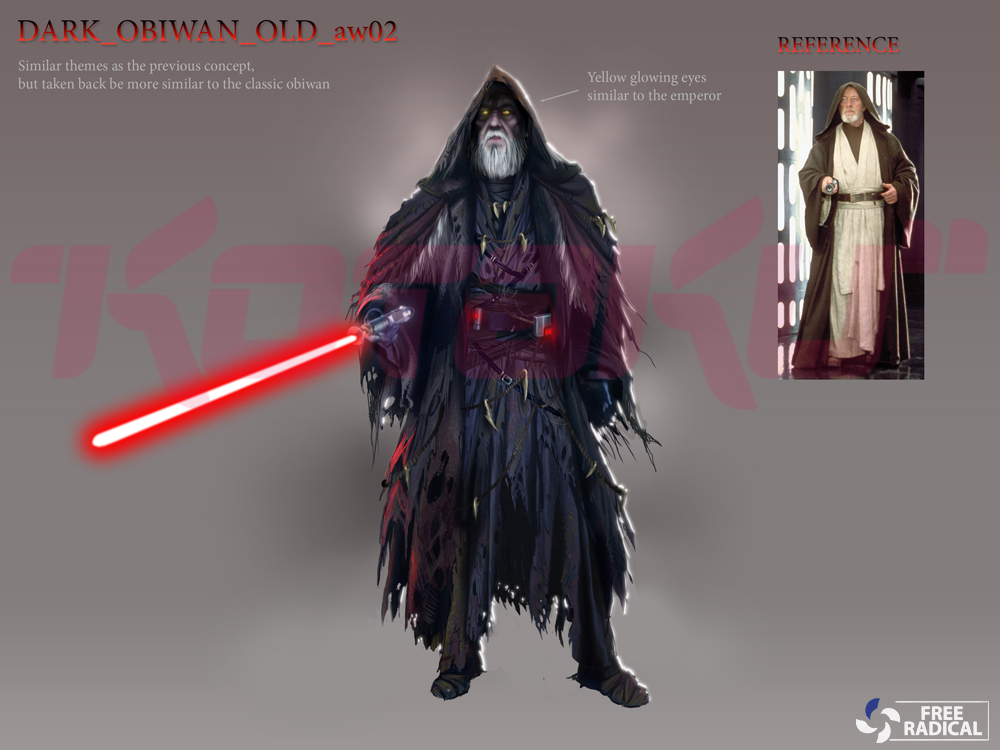
Now imagine if BioWare put someone like this in it.

TOR might be worth checking out, if only to compare it with its precessor. Regardless of how things out, I'm just thankful for the fact that we will soon be able to enjoy two Star Wars MMORPGs.

Acknowledgments: This blogger would like to thank fellow blogger Codamon for the Dark Obi-Wan picture above.

Tuesday, February 3, 2009

War PC Games


War PC games have come to my attention in recent times. If you recall, I mentioned in a previous blog post that. These are some of the serendipitous things that have somehow found their way onto my gaming lap.

War PC games include many different genres. Some of the more obvious ones I've encountered and played are First Person Shooters (FPSs), but there are simulators and strategy games out there that fall under the category as well. The genre is so broad that the distinctions can get a little bit blurry at times.

One particular war PC game that I've had the privilege to play was Call of Duty 4: Modern Warfare. as part of my job in the company I'd previously worked for. I was asked to review a particular game accessory and my colleagues recommended that I try it out with the said game.

Unfortunately, I never finished the single player campaign of this game due to time constraints. It did open my eyes, however, to the fact that war PC games need not be the mindless fragfests that I once thought they were. In fact, I was pleasantly surprised to discover that Call of Duty 4 required some intriguing think-on-your-feet strategy from me as a player.

One thing I'd like to bring to your attention today is the Tom Clancy series of war PC games. Someone came up with the brilliant idea of attaching this distinguished author's name to a whole lineup of games, and so far, the strategy has worked wonders.

Tom Clancy's EndWar, for example, is a real time strategy (RTS) game that makes exciting use of voice commands to direct one's troops in battle. The Splinter Cell lineup could pretty much give Konami's Metal Gear series a run for its money, at least as far as stealth games go. I'm also looking forward to H.A.W.X, as it reminds me a lot of the venerable Ace Combat games.

If you're looking for, I highly recommend that you give the Tom Clancy war PC game series a try. There are a variety of games to choose from in the series, so pick anything that looks seems to resonate with you and start playing. I can practically guarantee that you'll have a blast in more ways than one.

That's it for today. Thanks for reading, and welcome to the wonderful, weapon-filled world of war PC games.

Monday, February 2, 2009

PC Racing Games


PC racing games tend to catch my attention every now and then. Sometimes, I find the need to break away from the staple intellectual or strategy stuff and relax with something simpler -- something that gets my adrenaline pumping.

PC racing games may act as an interesting alternative to real life racing for armchair racers. If you don't happen to own a in real life, then picking up that controller or joystick may be the next best thing.

Admittedly, I haven't played too many PC racing games myself. Most of the ones I'm familiar with aren't even for the PC: the Initial D and Daytona series for the arcades, the F-Zero series, plus Mario Kart for the Nintendo Wii.

Nevertheless, the few PC racing games that I have played, and the ones that I've seen others play, are worthy of note. Which of them would I recommed? It really depends on what you're looking for.

You see, most PC racing games may be divided into two general types: simulators and arcade-style games. The former offer a more "realistic" experience than the latter because they attempt to mimic real life vehicle handling and physics. The Gran Turismo series would be a good start, as is anything with the word NASCAR, F1 or Grand Prix in it.

Arcade-style racers, on the other hand, tend to emphasize breakneck speed and fast-paced fun more than realism. Most of the games I've played fall under this category. I recommend the Initial D if you're a fan of the anime/manga. Initial D has a PC racing game with the subheading "Mountain Vengeance." You'll also find Initial D games at your local arcade.

My friend, Aodhan (yes, the same one who's making his own MMORPG) sings praises to the Need for Speed series (especially Need for Speed: Carbon) so you may want to check that out, too. If you're in the mood for some silly party console fun, Mario Kart is the way to go.

Come to think of it, maybe I should find out what Aodhan is so crazy about. Please excuse me while I check out some of his PC racing games.

Sunday, February 1, 2009

RPG Maker


RPG Maker may be just the series that certain RPG fans need to get their creative juices flowing. Granted, it's one thing to enjoy playing an RPG; it's quite another thing to actually make an RPG of your own.

RPG Maker, aka RPG Tkool aka RPG Tsukuru, is Enterbrain's and software series for budding RPG programmers. Enterbrain inherited the series from its progenitor, ASCII Corporation. While the series first enjoyed success in the Japanese Market, it eventually found its way to such countries as South Korea, Taiwan, China and the United States (the latter courtesy of Agetec).

Various installments of the RPG Maker series have appeared on multiple platforms over the years. These include the 8801 and 9801 models of NEC's PCs, the MSX2, the Super Famicom, the Gameboy Advance, and the PlayStation 1 and 2. The very first PC version of the program that ran on a Windows-based platform was RPG Maker 95. Later versions for 2000, 2003, XP and VX followed later on.

If you're new at this RPG creation, not to worry: the program comes with its own pre-made chipsets, events and characters. For those of you who wish to dig a little deeper, RPG Maker has many interesting options that allow players to create their own custom content.

In fact, there are communities out there dedicated to helping users to harness and explore their artistic skills. And even if you're simply out to learn mathematics and programming, the program can still be a big help to you, too.

If this article has gotten you interested in the program, here are some links to get you started: this link will take you to Enterbrain's official RPG Maker XP website, this link will lead you to Agetec's official website (PS2), and this link will take you to a tutorial website.

I hope that today's blog post has been of some help to you. Thank you for reading, and have fun letting your imagination run wild in RPG Maker!

Action RPGs


Action RPGs, or action role-playing games, refer to yet another notable sub-genre of electronic role-playing games. If the strategy RPGs I discussed last time dealt more with tactics, then this genre focuses more on "twitch" game elements.

Action RPGs have their battles in real time, which is fine by me. Being a twitch game fan originally, I welcomed this new sub-genre with open arms. It helped that I simply thought of action RPGs as action games with RPG elements thrown in.

It's hard to say what my very first action RPG was. I distinctly remember enjoying the first Legend of Zelda game on the NES many years ago, but whether it's really belongs to the genre is subject to debate.

The next action RPG I played was an old arcade game called Dungeons and Dragons: Tower of Doom. I ended up investing a small fortune in that and its sequel, Shadow over Mystara. These games got me so hooked that they got me desperately wanting to play other games like them.

Perhaps one of the most notable (if not the most notable) examples of action RPGs is Blizzard Entertainment's very own Diablo series. Strangely enough, I never really got into that action RPG series, but I did get into designed by former Blizzard North employees many years later. It was a game that was supposed to have been the spiritual successor of Diablo: Hellgate: London.

If you're looking to get your feet wet in the action RPG world, you're in good company. For retro stuff, I highly recommend that you pick up the first two games in the Diablo series. (Come to think of it, maybe I should follow my own advice.) They should still be available as part of a package deal in stores these days.

The Legend of Zelda series is also a good buy, and is still going strong on the Nintendo Wii. The more daring among you may wish too Google around for Dungeons and Dragons: Tower of Doom and Shadow of Mystara, plus an accompanying emulator. These should keep you busy until Blizzard releases Diablo III to a waiting world.

Thanks for reading my blog post for the day, and welcome to the fun, frenetic world of action RPGs.

Friday, January 30, 2009

Strategy RPGs


Strategy RPGs are part of an RPG sub-genre that deserves special mention in this blog. The fact they're a hybrids of two kinds of games makes them stand out. Though they are also known as TRPGs or Tactical RPGs, I will henceforth refer to them as SRPGs to avoid confusing them with Tabletop RPGs (also abbreviated as TRPGs).

Strategy RPGs
incorporate elements from RPGs but focus more heavily on strategy, hence their name. This is not to suggest that "normal" RPGs don't require any kind of strategy from the player -- they do. What it does suggest is that these RPGs borrow more from strategy games than from their traditional RPG cousins. Think of them as special RPGs with tactics on steroids.

An old friend of mine introduced me to a turn-based tactics game called S-COM: UFO Defense many years ago. I didn't really get into the game, but it did get me curious about the genre. That curiousity led me to my first strategy RPG years later: Final Fantasy Tactics.

By that time, I was already familiar with the Final Fantasy franchise, so I figured, why not? I took it for a spin and I was immediately hooked. In fact, I enjoyed that particular strategy RPG so much that I graduated to Tactics Ogre sometime later. Looking back, I felt it was several hundred hours of game time well spent.

How can you identify a strategy RPG? It isn't too hard : a third-person isometric view may be a good sign. Sometimes, the mere appearance of the word "tactics" in the title of the game is already a dead giveaway.

If you're into RPGs, then you owe it to yourself to pick up a good strategy RPG every now and then. If you're a PC gamer, some titles I'd recommend include Fallout Tactics: Brotherhood of Steel (especially if you're a Fallout series fan) and Silent Storm series. If console gamers are more your cup of tea, you may want to check out Disgaea: Hour of Darkness and Disgaea 2.

Well, that's it for today. Thank you for reading. Next time, I'll tackle yet another RPG sub-genre. For now, though, just sit back, break out your copy of Sun Tsu's Art of War and have some clean tactical fun with strategy RPGs.

Thursday, January 29, 2009

Atlus RPGs


Atlus RPGs, it seems, have been quite the sleeper hits until fairly recently. The success that their latest Shin Megami Tensei games have enjoyed have arguably catapulted them onto the mainstream RPG scene.

Atlus RPGs have a distinct feel to them that makes them stand out from the rest of the RPG crowd. There's something inherently quirky and even controversial about them that makes RPG players like myself sit up and take notice.

In Nocturne, for example, the world ends roughly five minutes into the game, and the apocalyptic scenario sets the stage for the adventure. Persona 3 had high school students "shooting" themselves in the head with what looked like handguns. Persona 4 had some characters questioning their gender and their sexuality.

Oh, and for the followers of Sigmund Freud, there's always Mara.

Of the few Atlus RPGs I've played, I must admit that I'm biased toward the Persona series, at least for the time being. The quality of interaction between the different characters in the games makes them endearingly fun to play. Nocturne has awesome gameplay mechanics, but there isn't exactly much interaction because your party members aren't human to begin with.

A common question I've encountered on forums is, "Do I have to play past Persona games in order to appreciate the latest installment?" The answer is no. While Atlus RPG veterans will definitely appreciate the Easter eggs and references to earlier games, playing the predecessors first isn't really necessary. Each Persona game (with the exception of the two halves of Persona 2) are stand-alone adventures.

So which Atlus RPG should you pick up first? It depends on the kind of game that you're looking for. If hardcore gameplay is your cup of tea, you may want to check out Nocturne (The game was re-released recently, so now may be a good time to do so.).

If you prefer bittersweet, epic battles and the challenge of not being able to directly control over your party, then P3 may just be the Atlus RPG for you. If character rapport, laughs and whodunits are more your thing, however, Persona 4 is the way to go.

PC RPGs are fun, but if you have access to a PS2 (or even a PS3 with backward compatibility), I highly recommend that you pick up some Atlus RPGs.

Wednesday, January 28, 2009

JRPGs


JRPGs (aka Japanese role-playing games, eastern RPGs or console RPGs) may be considered a niche market for Western RPG fans. While these games retain a lot of elements present in most RPGs, there are cultural nunances in these games that make them a treat to play.

JRPGs officially make their way to Western shores if the demand is great enough and if a a company is willing to market them on foreign soil. It falls to the publisher to adapt the game for a foreign audience who may not be familiar with the Eastern cultural themes presented in the game.

So how do you identify a JRPG from a Western one? There are many telltale signs, but take note that the following may not apply in each and every case.

For one thing, the way each one tells their story is already a dead giveaway. JRPGs tend to be more linear and scripted than their Western cousins. The trade-off is that the former often possess very dramatic characterization and plot events, so much so that they feel like interactive epic movies.

Secondly, certain archetypes tend to crop up more in JRPGs. The concept of the bishounen or "pretty boy" character is an Eastern concept, as is the tendency for characters to develop romantic relationships with each other (particularly if they're introduced early on in the game). The last two games in Atlus' Shin Megami Tensei's Persona series are good examples of this.

Thirdly, JRPGs often make use of the classic elements. I take it you've seen Avatar: The Last Airbender? Fire, water, earth and air spells can be seen in most Eastern RPGs such as the Final Fantasy series, with other elements like light and darkness thrown in for good measure.

Lastly, the so-called "random enemy encounter" is a console RPG staple. This happens when your heroes are wandering around, minding their own business, when they're suddenly whisked off to battle. It's a double-edged sword, and some of the more modern JRPGs no longer employ this feature.

Anyway, if you're interested in learning more about recurring themes in eastern RPGs, check out this tongue-in-cheek set from TVtropes.org regarding "RPG cliches." It's an amusing read.

Well, that's it for now. Thank you for reading my blog post. In my next article, I'll spend a little more time talking about one Eastern RPG I've had the privilege to play: Shin Megami Tensei: Persona 4. Stick with me for more info on the wonderful world of JRPGs.

Tuesday, January 27, 2009

console RPGs


Console RPGs make up yet another facet of the RPG phenomon I've gotten into lately. It's interesting how a humble little experiment ultimately caused a domino effect which opened up so many gaming possibilities for me.

Console RPGs first came to my attention during the late 1990s. The very first one I got into was Final Fantasy VII. Little did I know back then that it would eventually become the RPG introduced the non-Japanese world to the concept of JRPGs.

If I'm already into PC RPG games, why play console RPGs in the first place? Simple: diversity. I may be an RPG fan, but there's no reason to put all my eggs in one basket, especially when there are other good games to be experienced and enjoyed on other systems.

Some RPGs that started off on consoles eventually found their way to the PC. Certain installments in the Final Fantasy series come to mind. Likewise, there are RPGs that are available on both consoles and PCs (Interplay's Fallout 3, for instance) thanks to the current trend in multi-platform releases.

If you're new to the console RPG scene and you're looking for some good titles, there are some I'd highly recommend. In general, keep your eye out for any of the following series in their titles: Final Fantasy, Tales Of... (e.g. Tales of Heart, Tales of Vesperia, etc.) and Shin Megami Tensei. These games are property of the renowned companies Square-Enix, Namco and Atlus, respectively.

A word of advice: don't box yourself in and limit yourself to only titles from the Big 3 above. You'll never know what other good console RPGs may come from other, lesser known developers and publishers. Try whatever looks interesting (rent first if you can), and most importantly, have fun.

Today's blog was a bit on the general side, which is why next time, I hope to focus more on one the differences between Western and Eastern RPGs. Thanks for reading, and stay tuned for more goodies related to console RPGs.

Monday, January 26, 2009

Strategy PC Games


Strategy PC games deserve a special mention as an alternative form of electronic entertainment. Now you're probably asking why I'm writing about a different genre of games in this blog. Good question. The answer may be found in one of past blog entries -- I'm simply broadening my horizons and having a heck of a time enjoying it.

Strategy PC games can be just as entertaining as PC RPGs, only in a different way. If you've been playing turn-based RPGs for a while, immersing yourself in the adrenaline-rich environment of a real time strategy game can provide you that much-welcome break.

My first foray into the world of strategy PC games came with a classic game that my friend recommended to me: Dune II. I eventually graduated to the Command & Conquer series and eventually to the Warcraft series.

Being a deliberate person who prefers to think things through slowly, I initially found the frenetic a bit of a culture shock. I gradually warmed up to it, though. I can't say I'm the best strategy PC game player out there, but I've definitely gotten better at it as compared to when I first started out.

If you're a turn-based RPG player who's thinking of taking tentative steps into the world of strategy PC gaming, here are a few tips for you that may help ease the initial discomfort:

1. Try watching how other players play the game before you try it yourself. This is partly how I got interested in the genre. It also helped me learn a lot about game mechanics, team coordination and strategy.

2. Play the one-player campaign mode before even attempting to tackle other players. Granted, AI will always be different from human intelligence, but at least you can take the time to learn the ropes that way.

3. Play with experienced players. So what if you get creamed? Remember, you're not playing to win; you're playing to learn. You'll learn a lot more from players of a higher skill level than from those of your own skill level.

4. Talk to experienced players before and after you play them. Read guides and do some research. While there are only some things you can learn in the thick of battle, preparing beforehand and learning from other people's experiences is a good way to go.

5. Above all, don't forget to have fun. If you find yourself continually frustrated, then you're trying too hard and you're missing the point. If need be, take a break and come back to it another day. The worst case scenario is to accept that strategy PC games may not be for you and move on.

Well, that's it for today. There's nothing wrong with enjoying PC RPG games, but sometimes it pays to step out of your comfort zone once in a while and try something new -- in this case, strategy PC games.

Sunday, January 25, 2009

Game Programming


Game programming was something I never really got into. Now I may be passionate about electronic games, but I prefer tp play them and blog about them rather than make them. In fact, I nearly flunked out of all my computer courses in high school. Making games is for people like my friend, Aodhan (not his real name, of course).

Game programming was something that Aodhan got into relatively recently. Being a tabletop RPG player and a software engineer by trade, Aodhan is into games almost as much as I am. One day, his muse decided to pay him a visit. She whispered in his ear, "If you enjoy playing games, why not make your own?"

Thus the idea for Aodhan's MMORPG was born (Honestly, that's not its real name, but for simplicity's sake, let's call it that for now.).

You see, Aodhan wanted his MMORPG to be unique. In a discussion we had some time back, he went on to enumerate the things he liked and didn't like about the RPGs he'd played so far. His plan is to have an eclectic mix of all the good stuff he's encountered, with practically none of the bad stuff. In short, it's a project that'll put his game programming skills to the ultimate test.

What good stuff, you may ask? Check these out: a realistic in-game economy, NPCs that may not be there when you need to talk to them, quests that are meant for your character and your character alone, rumors that may actually not be true (no TV trope RPG clichés here, folks) -- the list goes on and on.

That’s the reason why I leave game programming to people like him. Who knows? Aodhan might even want to market it to MMORPG fans when the time comes. He may just have a winning business opportunity on his hands.

What about you, dear reader? Have you ever toyed with the idea of making your own RPG, or any other type game for that matter? Or perhaps you’d like to but you’re not exactly sure how to go about it?

Truth be told, I'm pretty much in the same boat. Those questions and more are some of the things I hope to explore in the near future, so stay with me as we continue to delve into the exciting world of RPGs and game programming.

Saturday, January 24, 2009

MMORPGs


MMORPGs comprise one particularly notable sub-field within the PC RPG game genre. It seemed like only yesterday when they felt more like a curiousity. Now it feels like they're sprouting all over the place faster than you can sing that endearingly annoying Badgerbadgerbadger etcetera song.

MMORPGs possess an appeal all their own. Yes, they're inherently PC RPG games, but they come with an interesting twist: you don't act out your character before NPCs alone -- you act out your character before other player characters as well.

Unfortunately, the RP in MMORPG is a bit of a contradiction in terms, partly because hardly anyone really, truly roleplays in the games. There are exceptions, of course. For example, there are servers in World of Warcrack--er, Warcraft that are assigned as roleplay servers. For the most part, though, you'll need to look long and hard for people who even know what roleplay is and who will also be willing to engage in it with you.

Nevertheless, knowing that there's a living, breathing human being behind that character you're interacting with changes things considerably, even if they're not roleplaying. There's someting wickedly fun about seeing how different people react to what you say and how you act toward them.

As nice at it sounds, delving into MMORPGs isn't all fun and games. There are some very real issues involved. I know -- I've been on the receiving end of some of these, myself.

Besides the very real prospect of rude and abusive players, you'll run into annoying characters controlled by third party programs, swindlers, kill-stealers, hackers and the like -- in short, the dregs of the MMORPG world. In fact, a friend of mine noticed this and remarked how virtual society can be a microcosm of real society. If there are nasties out there in the real world, you can bet your buns that they'll be online, too.

There's a principle in pyschology that applies to MMORPG player abuse. It's called the deindividuation principle. I know it sounds intimidating, but allow me to explain.

The principle simply states that people who can keep their identities anonymous tend to feel emboldened to do things they normally wouldn't do otherwise. That's why you have people doing unmentionable things in dimly-lit theaters.

If you take the appropriate protective measures, though, MMORPGs can be a blast to play. I sometimes fire up my old Ragnarok Online client, if only to chat with reminisce about the good old days with friends who still hang around ingame.

So enjoy the interaction, but watch yourself and steer clear of the less-than-edifying stuff in the PC RPG gaming wonder that is the MMORPG.

PC Adventure Games


PC adventure games are a relatively new genre for me. I'd gotten used to playing "twitch games" for most of my gaming life. At some point, I decided to break out of my mold and try something new. I don't really remember if it's because I'd played action games ad nauseum, or whether I simply wanted to broaden my horizons. I only knew that I wanted to experiment a little.

PC adventure games, I thought to myself, would be a great new place to start. I reasoned that I could always graduate to RPGs later on. Anyway, I decided to get my feet wet in the adventure game world with a game my friend had recommended: Star Control II. Great, I thought: nice sci-fi setting, interesting plot, and exciting hyper melee battle!

I may have thought that Star Control II was a PC RPG at the time, but it clearly wasn't. It didn't really matter, though; I still had loads of fun with it. I finished the game and set out to find an RPG to conquer. I was a man on a mission, an adventurer on an epic quest to find something worthy of my time.

I spotted Gabriel Knight II: The Beast Within behind a shop window and figured that was it. At last, I thought. My very first RPG! I immediately fell in love with the chilling story and dramatic FMV sequences. Alas, as much as Gabriel Knight II was, it was not a PC RPG game -- it was yet another example of an addicting PC adventure game.

Things got a bit hazy after that. By that time, I'd regained my interest in twitch games once more and I’d gone back to my first love. It would be many, many years later before I allowed myself the pleasure of my first real RPG. That would come in the form of a little Star Wars game I spotted during a garage sale. The rest, as they say...

Admittedly, I'm a late bloomer when it comes to PC adventure games and RPGs as a whole. It's partly due to the fact that I once thought they'd be boring. After all, what could be as fun as the fast-paced action games I'd been used to?

As I look back, I'm glad I proved myself wrong. Because of that seemingly little decision to drop by the garage sale on that fateful day, I can now say that both PC adventure games, PC RPGs and games of other genres are now a staple part of my gaming diet.

Well, that’s it for today. Thank you for reading this blog. Maybe next time, I'll tell you a little more about my experimentation with variations of PC adventure games.

Friday, January 23, 2009

PC RPG Games


PC RPG games sure have a way of reawakening your sense of wonder, don't they? Of course, you may argue that all good video games do that, but there's something about the genre that just draws you in. It may be likened to the way a deep sea diver gets tempted to remain underwater indefinitely, simply because it's extremely beautiful down there.

PC RPG games, in my opinion, just resonate with the dreamer in you. You don't merely play the game -- you become the game. Even if the RPG's developers only make preset character features and options in a game, players are usually allowed a certain degree of customization and/or the freedom to act out their character's actions and dialogue. That's what role-play is, after all.

I'll never forget my first in-depth experience with a PC RPG game. Call it an act of serendipity or whatever, but I managed to snag a used, original copy of Knights of the Old Republic from a seller at a local garage sale. It was still in good condition, and it only cost me about twenty-five US cents. Talk about an awesome deal!

Before then, I'd wondered what all the hullabaloo about KotOR was. It wasn't long before I found out firsthand. The game was simply phenomenal. It had all the elements of a good Lucasarts film-turned-video game: a riveting story, adrenaline-pumping action, tongue-in-cheek humor, nasty political intrigue, fun mini-games, and the ever-lovable lightsabers, to name a few.

I thoroughly enjoyed almost every aspect of the PC RPG, but perhaps the most fun part for me involved steering my character toward the Light or the Dark Side with my actions and conversation responses.

I guess that's what sets the genre apart from the rest: few things in life can surpass the indescribable feeling of taking part in an epic adventure, and actually seeing that adventure to its satisfying, kick-ass conclusion. And in the event that the real world seems too boring or painful, it helps to get away for a while, to shut out all distractions, and to just settle down with the RPG of your choice.

Anyway, this is my first blog post on this site, but it definitely won't be my last. I hope to focus on other aspects of the genre in the near future. For now, though, thanks for reading, and be sure to watch this space in the near future for more on PC RPG games.